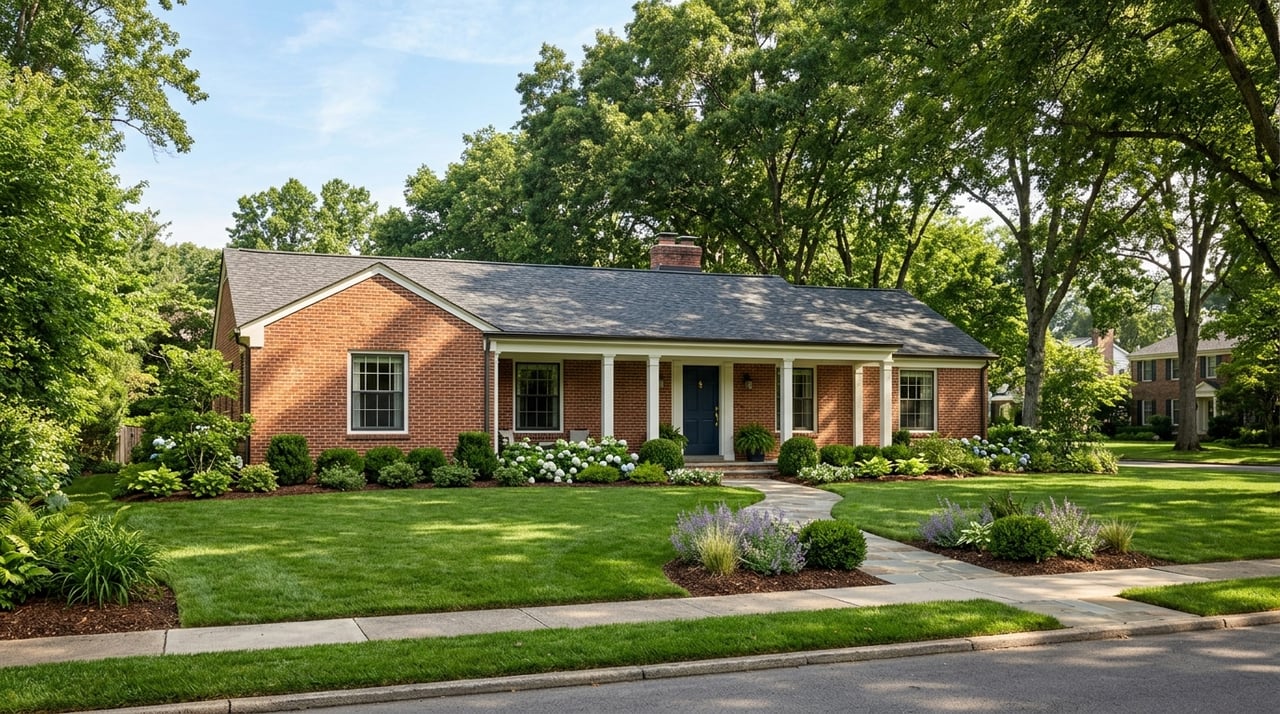
Wondering why one part of Monroe feels full of porches and older city lots while another offers newer floor plans and planned streets? If you are buying, selling, or relocating, that mix can make Monroe feel a little harder to read at first. The good news is that once you understand how Monroe’s neighborhoods and home styles developed, it becomes much easier to spot the right fit for your goals. Let’s dive in.
Monroe housing stock in context
Monroe’s housing market is shaped by age, variety, and geography. According to the city’s 2024 housing study, Monroe had 8,882 housing units as of 2021, and about 70% were single-family detached homes. Another 26% were in buildings with two or more units, which helps explain why the housing mix can shift quickly from block to block.
A big part of Monroe’s character comes from its older housing stock. The same study says 72% of buildings were built before 1970, and 33% were built before 1940. Only 25 new residential permits have been issued since 2010, so much of what you see in Monroe today reflects long-established neighborhood patterns rather than widespread recent construction.
That matters whether you are buying or selling. Older housing often brings more architectural variety, while newer pockets may offer more standardized layouts and design features. The city also notes that demand remains strong for single-family homes and low-density multifamily options such as duplexes.
Why Monroe changes block by block
One of the biggest reasons Monroe feels varied is zoning. City materials divide residential land into several district types, including large-lot, medium-lot, small-lot, multiple-residential, mobile-home-park, and planned-unit-development areas. In practical terms, that means the housing pattern can change quickly as you move through different parts of the city.
The city’s zoning ordinance describes R-2 as primarily for two-family dwellings and as a transitional district near the central business district. RM is intended for more intensive residential use with multiple dwellings. For you as a buyer or seller, this helps explain why some close-in areas blend single-family homes, duplex-style housing, and other residential formats within a relatively short distance.
Older in-town Monroe neighborhoods
If you are drawn to established streetscapes and homes with character, Monroe’s in-town areas stand out. The city’s Historic District Commission says a comprehensive survey identified 3,352 buildings and structures and nearly 100 sites that pre-date 1930. Monroe also established three nationally recognized historic districts in 1998, including the central business district.
This older core gives Monroe a strong sense of continuity. The city even supports preservation through its Your Heritage Home programming, which helps residents care for older houses and preserve original craftsmanship. That tells you older homes here are not just common, they are an important part of the city’s identity.
What older in-town homes often look like
Public listing examples help show the pattern many buyers will encounter. A 1913 home on East 4th Street offered 1,598 square feet on a 6,970 square foot lot, along with a covered front porch and fenced yard. A 1928 home on Arbor Avenue had 1,562 square feet on a 6,098 square foot lot, plus a large front porch and detached garage.
Taken together, these examples suggest many older Monroe homes feature:
- 1.5- to 2-story layouts
- Modest city lots
- Front porches
- Detached garages
- Long-established street patterns near downtown
For buyers, that can mean more charm and more variety in layout. For sellers, it can mean your home stands out through details that are harder to find in newer construction.
Historic areas and walkable surroundings
Monroe also emphasizes neighborhood-scale amenities. The city describes Monroe as a walkable community with a sidewalk network, and it says the parks system includes 38 parks across 300 acres throughout the city and its neighborhoods. If you want a location where parks, sidewalks, and established blocks are part of daily life, that is an important part of Monroe’s appeal.
Of course, “walkable” can mean different things depending on the exact address. That is why it helps to look at each property in context rather than assuming every in-town location offers the same experience. In Monroe, proximity to downtown, parks, and civic amenities can vary meaningfully from one neighborhood to another.
Orchard East and close-in neighborhood variety
Orchard East is one of the clearest examples of Monroe’s close-in variety. The city describes it as a diverse residential and commercial neighborhood bounded by the River Raisin, I-75, Plum Creek, and Jerome Street. It covers 4.8 square miles and sits within walking distance of downtown.
For buyers, Orchard East may appeal if you want an in-town setting with a mix of uses and housing types. For sellers, it is also worth noting that the city has focused planning attention there. Monroe says the neighborhood plan includes new housing, retail, and cultural resources, which means this area may continue to evolve over time.
That does not mean every block will feel the same or change at the same pace. It means Orchard East is a good reminder that in Monroe, neighborhood identity often comes from both existing housing stock and city planning activity.
Newer planned neighborhoods in Monroe
If you prefer a more modern neighborhood pattern, Mason Run is Monroe’s clearest example. The city says this neighborhood was approved in 1999 to transform an urban brownfield using New Urbanism. Its design includes a range of housing types, narrower streets, front porches, and sidewalks that encourage neighbor interaction.
This is a different feel from many older in-town blocks, even though some features overlap. You may still find front porches and sidewalks, but the overall neighborhood layout is more planned and cohesive. That can appeal to buyers who want a newer home while still enjoying a neighborhood-oriented design.
What newer Monroe homes often offer
Public listing examples show how that planned pattern translates into real homes. A 2025-built Mason Run home had 3 bedrooms, 2.5 baths, 1,572 square feet, and a 5,400 square foot lot. A 2004-built home in the same neighborhood had 3 bedrooms, 2.5 baths, 1,928 square feet, a front porch, and a 5,663 square foot lot.
The Mason Run community page also describes ranch and two-story colonial floor plans ranging from about 1,528 to 2,020 square feet. Based on the city description and those listing examples, newer Monroe subdivision homes often include:
- More standardized floor plans
- Compact lots
- Attached garages
- Ranch or two-story colonial options
- Sidewalk-oriented neighborhood design
For buyers, that can mean more predictable layouts and lower variation from house to house. For sellers, it can help position your home around functionality, newer construction, and neighborhood design.
Country and edge-of-county properties
Not every Monroe-area home fits into a city-neighborhood pattern. If you look beyond the more urban parts of Monroe, you will find properties with more land, more outbuildings, and a different set of practical considerations. This is where Monroe County’s guidance becomes especially important.
The county says a large percentage of residents get potable drinking water from groundwater, and many areas rely on private wastewater disposal systems rather than municipal sewers. It also notes that groundwater can be affected by malfunctioning septic fields, agricultural chemicals, and fertilizers. That means utility setup is not something to assume when you are evaluating a country or edge-of-county property.
What rural Monroe properties may include
Representative listings show the range. A parcel on South Custer Road in Raisinville Township was described as a 2.05-acre country setting where septic would be required. Another property on Sheick Road included 6.4 acres, a barn-ready setting, well and septic service to the dwelling, and city water at the street.
A property on North Custer Road offered 10.53 acres on the Raisin River with a pole barn and shed. These examples suggest country properties in the Monroe area may include:
- Acreage
- Pole barns or other outbuildings
- Private well or groundwater service
- Septic systems
- Parcel-by-parcel variation in utility access
If you are buying, read each listing carefully and verify service details early. If you are selling, clear information about water source, septic, and outbuildings can help buyers understand the property faster.
Home style differences to expect
When you compare Monroe neighborhoods, a few broad home-style patterns stand out. Older in-town areas often lean toward early 20th-century homes on modest lots, with porches and detached garages. Newer planned areas like Mason Run tend to offer ranch and two-story colonial floor plans on compact lots with a more consistent neighborhood layout.
Country properties usually shift the focus away from subdivision uniformity and toward land, buildings, and utility setup. In those areas, home style is only part of the decision. The lot, access to services, and outbuilding features can matter just as much.
How to evaluate a Monroe neighborhood
If you are trying to narrow down the right part of Monroe, start with the features that matter most to your daily life or sale strategy. Monroe’s housing stock is varied enough that the right fit often comes down to matching priorities with location.
Here are a few smart questions to ask:
- Do you want historic character or a newer floor plan?
- Are you comfortable with an older home that may have unique upkeep needs?
- Do you want a close-in location near downtown and parks?
- Would a planned neighborhood with sidewalks and consistent design feel easier to manage?
- If you want land, have you confirmed water and septic details for the specific parcel?
The city’s GIS viewer can also help make your search more precise. Monroe says the tool includes parcels, flood plain, building footprints, water availability, zoning, parks, and a historic district map. The assessor’s property sales page also links a residential neighborhood boundaries map and yearly sales files, which can help you understand how an area is laid out.
Why this matters when buying or selling
In Monroe, neighborhood and home style are closely connected. A seller with an older in-town home may need a strategy that highlights craftsmanship, porch appeal, and location near established amenities. A seller in a newer planned neighborhood may benefit from marketing that emphasizes layout, convenience, and neighborhood design.
For buyers, understanding these patterns can save time and reduce surprises. Instead of searching Monroe as one single housing type, it helps to think in categories: historic and close-in, newer planned neighborhoods, or rural and edge-of-county properties. That approach usually leads to better decisions and a smoother search.
If you are planning a move in Monroe County and want practical guidance on neighborhood fit, pricing, or how to position your home for the market, Darby Notario offers hands-on support with the responsive, consultative approach The Darby Group is known for.
FAQs
What kinds of homes are most common in Monroe, MI?
- Monroe is dominated by single-family detached housing, which made up about 70% of the city’s housing units as of 2021.
Are most Monroe, MI homes older or newer?
- Most Monroe homes are older, with 72% of buildings built before 1970 and 33% built before 1940 according to the city’s 2024 housing study.
What is Orchard East in Monroe, MI like?
- Orchard East is a close-in Monroe neighborhood with residential and commercial uses, walking access to downtown, and ongoing city planning for new housing, retail, and cultural resources.
What home styles are common in older Monroe, MI neighborhoods?
- Older in-town Monroe homes often include 1.5- to 2-story layouts, modest lots, front porches, and detached garages based on representative public listing examples.
What home styles are common in newer Monroe, MI neighborhoods?
- In newer planned areas like Mason Run, you will often find ranch and two-story colonial floor plans, compact lots, attached garages, sidewalks, and a more consistent neighborhood layout.
What should buyers check on rural Monroe County properties?
- Buyers should confirm water source, septic setup, and utility access early because many country properties rely on groundwater and private wastewater systems rather than municipal sewer service.