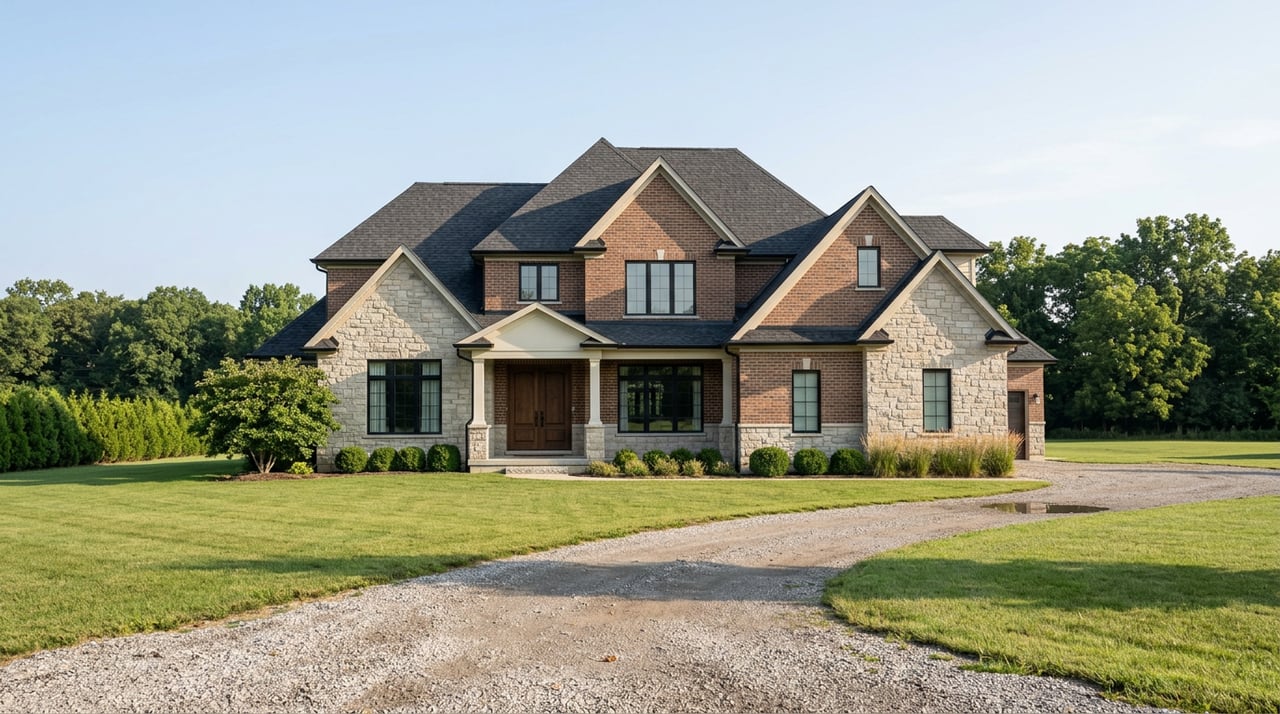
A seller lists a house on the edge of town, prices it against a comparable a half mile away, and expects the same closing timeline. Then the title company asks for a Time of Sale evaluation letter from Washtenaw County, and the seller learns that the comparable down the road never needed one. Same zip code. Same school district. Different rules, because the two properties sit on opposite sides of a boundary that didn't exist before November 2023.
That boundary is the line between the city of Manchester and Manchester Township, and it now determines whether a closing runs on a normal timeline or waits on a well and septic evaluation that can take weeks to clear.
One Village, Then Two Governments
Manchester was a village for over 150 years, governed as part of Manchester Township. That changed on November 7, 2023, when 66 percent of village residents voted to incorporate as an independent city. The city officially separated on November 15, 2023, and a mayor and city council were sworn in five days later.
Before the split, the township's population stood at 4,626 people as of the 2020 census, a figure that included the village. After incorporation, the city and township became two distinct local governments with two distinct sets of infrastructure. The city, home to about 2,037 residents at the 2020 census, largely runs on municipal water and sewer. The township, which wraps around it, is still mostly farmland and larger residential parcels served by private wells and septic systems.
That distinction sounds like a technicality until you get to closing.
Why the Line Matters More at Closing Than on a Map
Washtenaw County runs a Time of Sale Program that requires an inspection of on-site well and septic systems before a home changes hands. It applies to properties served by private systems, which means it applies almost entirely to homes in the township rather than the city. Local septic contractors who work across the county specifically name Manchester as one of the outlying areas where thousands of homes still rely on private wells and on-site wastewater treatment rather than city service, alongside Dexter, Saline, Scio Township, and Webster Township.
The practical version: buy or sell inside Manchester's city limits, and you're likely dealing with the same utility connections as any other in-town closing. Buy or sell a few roads over in the township, on a wooded five-acre parcel or a farmhouse set back from the road, and you're inside one of the county programs that industry sources describe as among the strictest point of sale requirements in Michigan.
| City of Manchester | Manchester Township | |
|---|---|---|
| Typical utilities | Municipal water and sewer | Private well and septic |
| Time of Sale evaluation required | Rarely applies | Standard requirement |
| Governed since Nov. 2023 by | City of Manchester | Manchester Township |
What the Evaluation Actually Checks
The evaluation itself has to be performed by a county registered evaluator, and the results get filed with the health department before the sale can close. Both systems get looked at where both are present. On the septic side, the inspection commonly turns up cracked baffles, tanks that haven't been pumped in years, damaged distribution boxes, and drain fields already showing signs of failure. On the well side, water samples are tested, and a property with a reverse osmosis system needs an additional sample pulled.
Sellers should budget somewhere between $300 and $500 for the evaluation itself, with the wider range for septic inspection work across Michigan running from roughly $250 to $700 depending on tank size and access. That's a manageable number when it's planned for. It becomes a much bigger number when it surfaces during an open escrow and nobody scheduled it in advance.
If It Fails, You Don't Get to Wait. You Get to Escrow.
A failed evaluation doesn't automatically kill a deal, but it does add steps. Under the county's program, a sale can still proceed if the seller puts together a specific package before closing:
- A corrective action plan, which may simply be a permit to replace the failing component
- Proof of a signed contract with a licensed contractor to complete the repair
- An escrow account funded at 1.5 times the estimated cost of the repair
- The appropriate program fee
Once that package is submitted and approved, the sale can move forward even though the physical repair happens after closing. It's a workable path, but it only works if someone starts it early. County materials describe the underlying evaluation and clearance process as taking a minimum of several weeks even when the system passes on the first try, and a failed system with repairs pending adds more time on top of that.
The Acreage Math Behind the Requirement
Manchester Township's own 2025 master plan gives a sense of what's actually on these private-system lots. The plan notes recent sale prices around $350,000, above the statewide Michigan average of roughly $236,100, and it defines Agricultural and Rural Residential land as any parcel of three acres or more with at least one home on it. The plan also points to conservation subdivision design, an approach that clusters homes on part of a site while preserving the rest as open space, as particularly effective on parcels running five to fifteen acres.
Put together, this means the township's private-system inventory isn't limited to modest older farmhouses. It includes newer builds on generous acreage, priced well above the state median, where a well and septic evaluation is simply part of the deal regardless of what the listing price says. A buyer paying up for five wooded acres and a pole barn is still going to wait on the same county paperwork as the owner of a much smaller parcel.
Timing a Listing Around It
For a seller in the township, the fix is sequencing, not worry. Order the Time of Sale evaluation as soon as a listing date is set, not after an offer comes in. If the system passes, the letter is in hand well before closing and nobody is scrambling. If it doesn't, there's time to line up a contractor and fund the escrow account without holding up a buyer who's already packed boxes.
This is exactly the kind of coordination The Darby Group builds into a listing plan for Manchester Township sellers, alongside staging and marketing timelines. If you're weighing whether now is the right time to list a township property, our guide to buying acreage and country homes near Manchester covers more of what makes rural Manchester parcels different from a standard subdivision purchase, and our Manchester neighborhood page has more on the area generally.
FAQ
Does every home in Manchester need a Time of Sale evaluation? No. The requirement is tied to having a private well or septic system, not to being located within any particular city or township boundary as such. Most homes inside Manchester's city limits are on municipal water and sewer and fall outside the program. Most homes in the surrounding township are on private systems and fall inside it.
How long is a passing evaluation good for? The evaluation letter is tied to the specific sale it's issued for. If a sale falls through and the property is relisted much later, plan on confirming with the county whether a new evaluation is needed rather than assuming the old one still applies.
What if I'm buying rather than selling? The obligation to arrange the evaluation sits with the seller, but a buyer should still ask to see the evaluation letter and any related repair documentation before closing. If a corrective action plan and escrow are in place, ask what the timeline is for the actual repair work to happen after you take ownership.
If you're planning a sale or purchase in Manchester Township and want a clear-eyed look at where your property sits on the well-and-septic map, request your free home valuation and we'll walk you through what a realistic timeline looks like from list to close.